

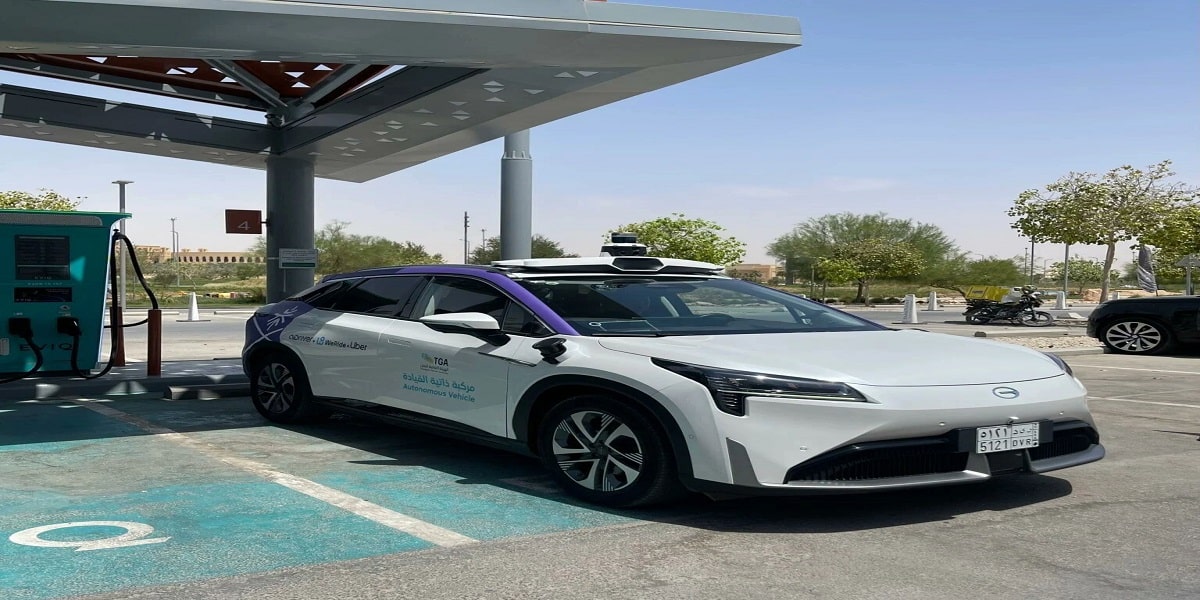
Saudi Arabia has launched its first operational trial of autonomous vehicles in Riyadh, marking a significant milestone in the Kingdom’s ongoing push toward smart mobility under its ambitious Vision 2030 agenda.
The pilot phase, unveiled at King Khalid International Airport, includes select expressways and destinations across central Riyadh. Supervised by the Transport General Authority, the trial features autonomous vehicles operating in real-world environments with a safety operator onboard to ensure smooth and secure performance.
The initiative is the result of a high-level collaboration involving the Ministry of Transport and Logistics, the Saudi Authority for Data and Artificial Intelligence (SDAIA), the Ministry of Interior, and the General Authority for Survey and Geospatial Information. Key private-sector partners include Uber, WeRide, and AiDriver, forming a model public-private partnership.
Minister of Transport and Logistics Services Eng. Saleh bin Nasser Al-Jasser emphasized that the project demonstrates Saudi Arabia’s growing capacity for innovation.
“This step reflects the Kingdom’s ambitious vision to build a smart and integrated transportation system that supports economic growth and improves quality of life,” Al-Jasser said.
The autonomous vehicles use cutting-edge artificial intelligence (AI) to navigate traffic and interact with passengers, making this trial a foundational move toward the National Strategy for Transport and Logistics Services. It also aligns with Saudi Arabia’s sustainability goals by promoting low-emission and high-efficiency transport alternatives.
The trial is a pivotal element in the Kingdom’s broader strategy to localize technology and empower innovation in the transportation sector. The AI-powered systems are being closely monitored to ensure safety, reliability, and scalability across the nation.
This initiative highlights Saudi Arabia’s role as a regional leader in future mobility. As part of Vision 2030, the project aims to reduce the country’s carbon footprint, improve urban connectivity, and pave the way for more widespread deployment of self-driving technologies in the coming years.
With Riyadh as its proving ground, Saudi Arabia’s autonomous transport trial could shape the future of smart cities in the region and beyond.