

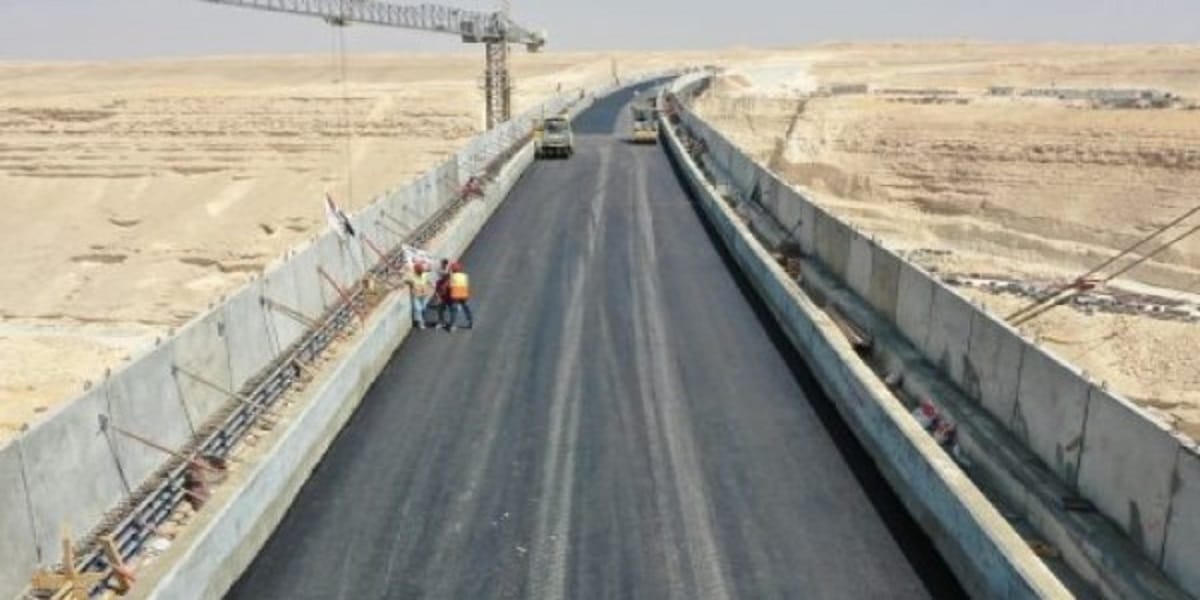
Egypt is pushing ahead with a landmark infrastructure project to strengthen its logistics backbone and industrial competitiveness. The Ministry of Transport confirmed rapid progress on the 63.5 km Rubiki–10th of Ramadan–Belbeis railway line, a key segment of the Ain Sokhna–Alexandria Logistics Corridor.
The line is designed to connect Egypt’s largest industrial hubs, particularly the 10th of Ramadan Industrial Zone, with major seaports on the Red Sea and the Mediterranean, including Ain Sokhna, Adabiya, Port Said, Damietta, Alexandria, and Dekheila. The project is being implemented by national contractors and local consultants, covering bridges, track installation, and new passenger and freight stations.
According to officials, the railway will transform Egypt’s freight landscape by decongesting ports, accelerating container flows, and streamlining the movement of raw materials and manufactured goods. A direct link to the dry port in 10th of Ramadan City will also ensure nationwide logistics integration, with further connections planned to the New Administrative Capital’s high-speed electric train station.
Beyond goods movement, the line will serve passenger needs. Currently, 90% of workers in the 10th of Ramadan Industrial Zone commute from Belbeis using private transport. The new rail service will reduce traffic congestion, cut commuting costs, and ease pressure on road networks.
The Ministry highlights the project’s green benefits, noting that it will reduce fuel consumption, lower carbon emissions, and enhance road safety. Lieutenant General Kamel El-Wazir, Minister of Transport, emphasized: “Transportation is the main artery of economic and social development in the framework of building the new republic.”
In addition, the Ministry is studying a new loading dock within the industrial zone to improve export flows and consumer market supply. This effort aligns with Egypt’s wider vision of establishing seven integrated logistics corridors that connect industrial, agricultural, and mining regions with seaports and dry ports through safe and sustainable transport.
By modernizing its rail and logistics infrastructure, Egypt is positioning itself as a global hub for trade, manufacturing, and exports, furthering President Abdel Fattah El-Sisi’s vision of building a resilient “new republic.”