

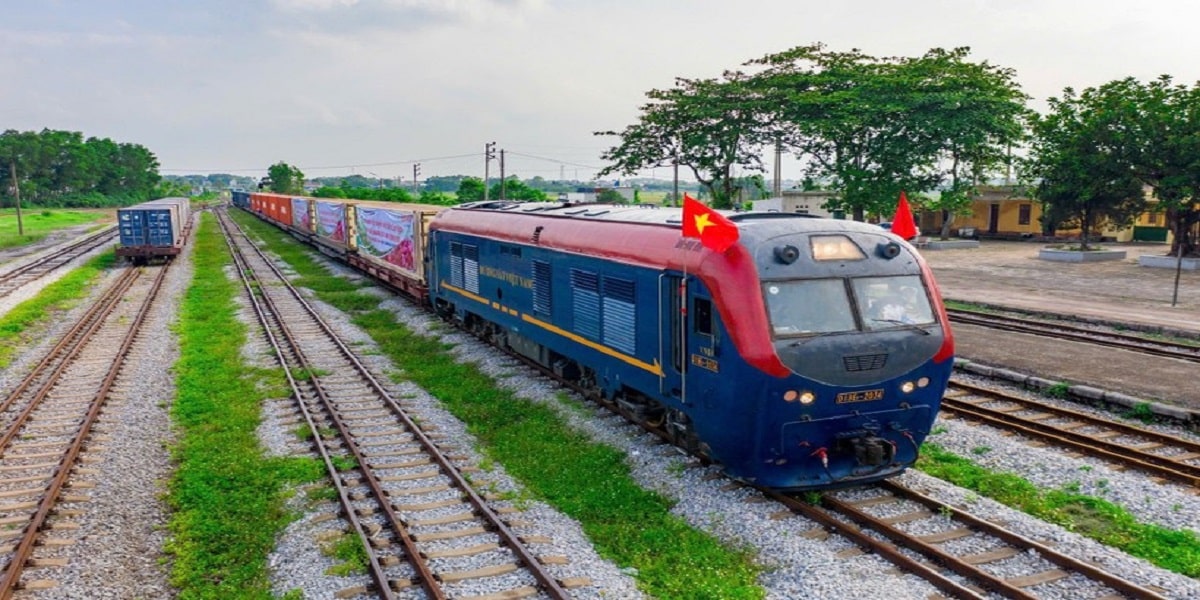
Vietnam and Russia have reached a landmark agreement to jointly develop a cross-continental railway connecting the two nations via China and Mongolia — a project expected to transform Eurasian trade and transport networks.
The announcement came during a bilateral meeting between Vietnamese Prime Minister Phạm Minh Chính and Russian Deputy Prime Minister Aleksey Overchuk on the sidelines of the 47th ASEAN Summit in Kuala Lumpur.
Under the plan, transport enterprises from Russia, Vietnam, and China will coordinate the railway’s development beginning in 2025, with financing managed through a combination of state agencies and private-sector partners. The line, stretching over 2,200 kilometers, will facilitate the movement of exports from Russia’s Tuva region, Mongolia, and southern China to Vietnamese ports, creating a direct overland link across Eurasia.
Deputy Prime Minister Overchuk praised Vietnam as “a time-honoured and trustworthy partner of Russia,” emphasizing that cooperation with the Southeast Asian nation remains a strategic priority. He added that the project reflects a shared vision of enhancing connectivity and expanding trade routes beyond traditional maritime channels.
The planned corridor is expected to strengthen Russia’s role within the Eurasian transport network while providing Vietnam with expanded logistics and port infrastructure capacity. As part of the wider cooperation framework, Russia’s FESCO Transportation Group will also increase direct cargo train frequency to six trips per month, supporting the growing trade demand.
Experts have described the railway as one of the key Eurasian infrastructure projects of the decade, with potential to reshape regional trade flows and attract substantial foreign investment. Technical assessments and capital mobilization are already under way.
For Vietnam, the initiative aligns with its economic diversification strategy and long-term goal of becoming a regional logistics hub. For Russia, it reinforces its pivot toward Asia amid shifting global trade dynamics. Together, the two countries are not only building a railway — they are laying the foundation for a new era of transcontinental cooperation.