

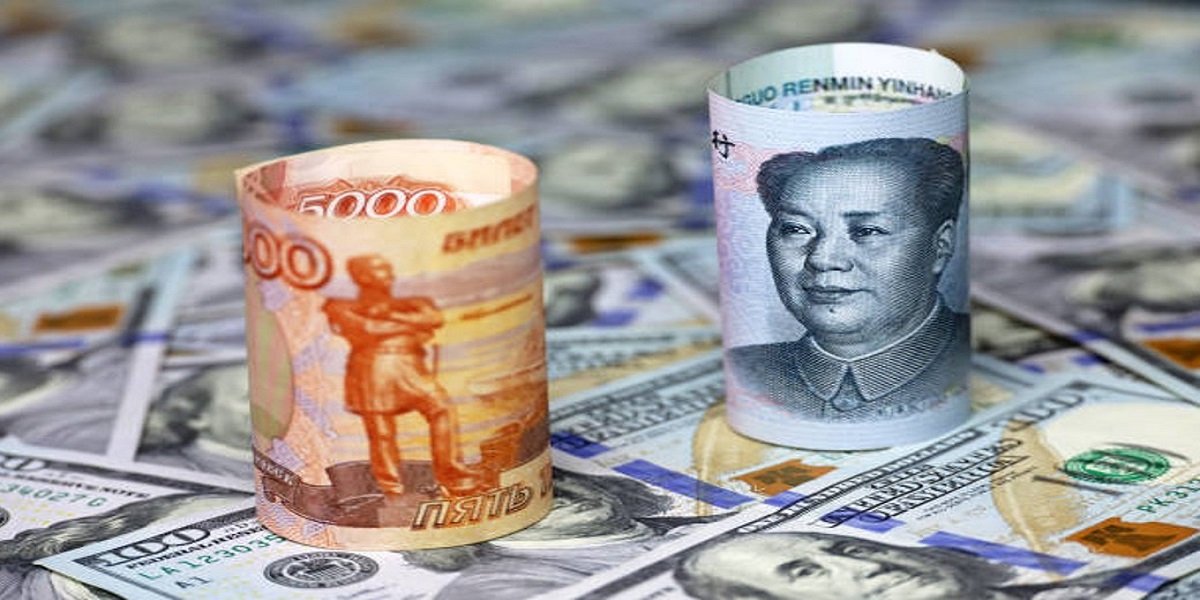
The BRICS alliance has advanced its long-running effort to reduce global dependence on the US dollar, with Russia issuing $2.8 billion in sovereign bonds denominated in Chinese renminbi — its first sale of government debt in Beijing’s currency.
The issuance marks a major milestone in the bloc’s de-dollarization push, strengthening financial integration between Moscow and Beijing as both nations seek alternatives to Western-controlled markets.
The latest issuance included 12 billion yuan in 3.2-year bonds with a 6% coupon rate and 8 billion yuan in 7.5-year bonds at 7%, tapping China’s comparatively low interest rates and Russia’s growing yuan reserves. The move reflects Russia’s strategy to secure cheaper funding as Western sanctions continue to restrict access to dollar- and euro-based financing.
Russia’s finance minister, Anton Siluanov, described the bond sale as a breakthrough for bilateral economic cooperation.
“We have succeeded in creating a liquid sovereign benchmark that will serve as a pricing guide for corporate borrowers and will contribute to the deepening of bilateral co-operation between Russia and China in the financial sector,” he stated.
Siluanov added that the transaction, executed entirely through Russian accounting and settlement systems, “opened up significant opportunities for the further development of the national financial market.”
Much of Russia’s $50 billion National Wealth Fund now holds assets denominated in yuan, giving the state and major companies access to Chinese liquidity. Sanctions imposed after Russia’s 2022 invasion of Ukraine — including removal from SWIFT and the freezing of about $300 billion in foreign exchange reserves — accelerated Moscow’s pivot toward China for trade and financing.
Russia’s currency realignment also stems from a surplus of yuan generated through redirected energy exports to China, while Beijing depends on Russia for raw materials and energy security. This symbiosis has enabled the issuance of yuan-denominated bonds as a strategic tool for liquidity management and long-term financial sovereignty.
Analysts argue the issuance signals broader geopolitical change. Helena Fang, of Chengxin International Credit Rating, told Bloomberg that Russia’s move represents “a significant example of localized application of yuan internationalization and a key indicator of the changing global financial landscape,” adding that it will support the long-term global trend toward de-dollarization.



