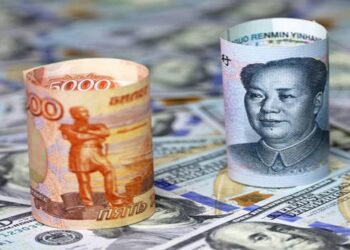

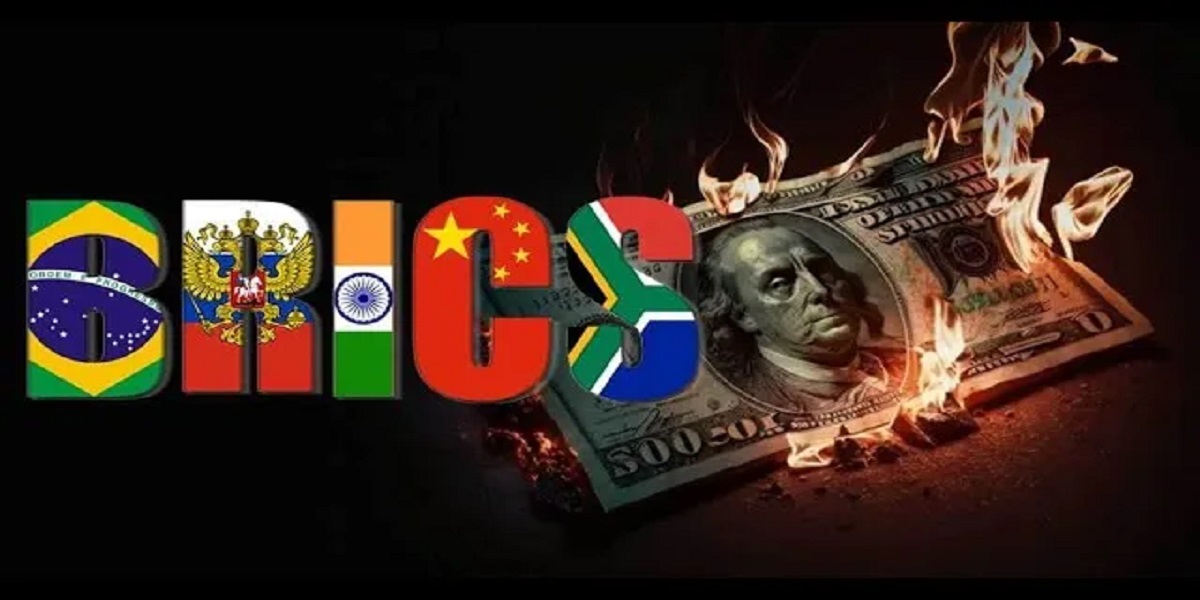
An international analyst has stated that BRICS is increasingly winning the battle against the US dollar, as the bloc steadily expands its financial influence and reduces reliance on Western-dominated monetary structures. Recent data on trade flows, reserves, and currency use suggest a gradual but meaningful shift in the global financial balance.
For the first time in modern economic history, the BRICS bloc has surpassed the G7 in its share of global GDP, reaching nearly 35%, a milestone that has reignited debate over the future of the dollar-centered system.
“What we are witnessing is not the collapse of the dollar, but the erosion of its monopoly,” the analyst noted, pointing to structural changes in trade settlement and reserve management.
Historically, dominant global powers have shaped reserve currencies, from the Spanish real and British pound to the US dollar, which consolidated its supremacy after the Bretton Woods Agreement of 1944. Even today, the dollar remains the backbone of the global financial system, accounting for around 58% of global reserves in 2024. Its dominance allows the United States to exert extraordinary leverage through sanctions and financial controls.
That leverage became evident after the 2022 sanctions on Russia, when hundreds of billions of dollars in reserves were frozen and access to SWIFT was restricted. These measures accelerated de-dollarization, pushing BRICS countries to seek alternatives. Energy trade became a key testing ground: Russian oil exports shifted toward Asia, with major deals increasingly settled in yuan and rubles instead of dollars.
Alongside trade realignment, BRICS nations have steadily reduced holdings of US Treasury bonds while strengthening gold reserves. China and Russia, in particular, have accelerated gold accumulation since 2022, viewing it as a neutral asset immune to political freezes. As the analyst emphasized, “Gold represents trust beyond politics, which is why it is returning to the center of reserve strategies.”
Despite this momentum, significant obstacles remain. BRICS is not a fully unified economic bloc, and internal geopolitical tensions limit the prospects of a single common currency in the near term. Still, its demographic scale, commodity dominance, and expanding use of alternative currencies signal a world in transition.
In the short term, the dollar remains central. Yet the steady diversification of reserves, bilateral trade in local currencies, and rising gold holdings indicate that the global monetary system is slowly, but decisively, evolving.