

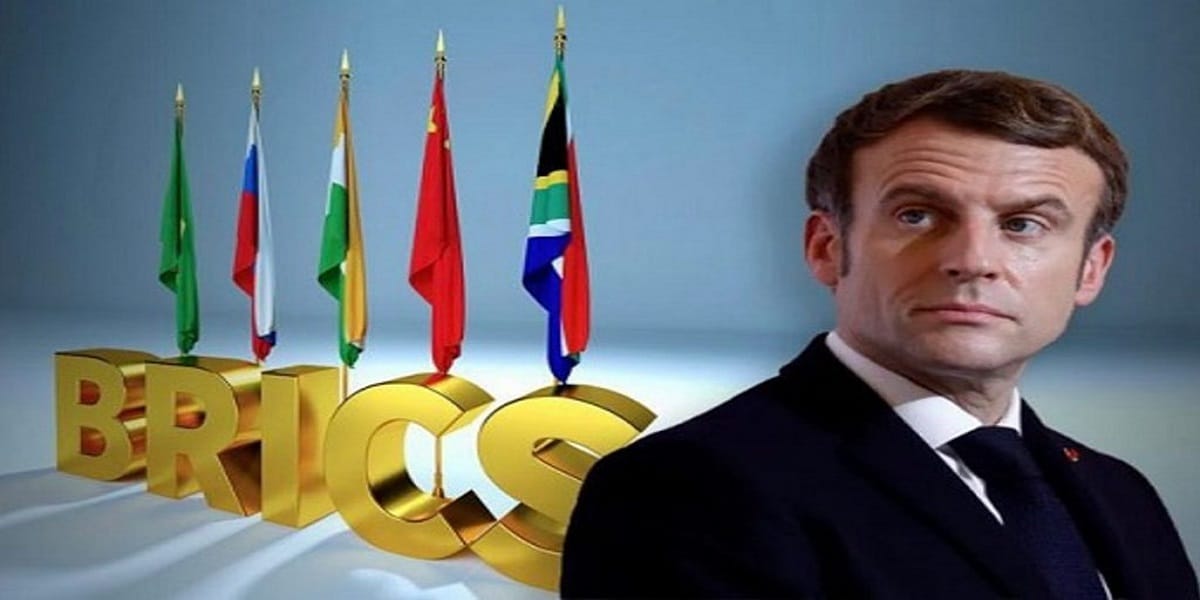
France’s growing engagement with China is fueling speculation of a geopolitical realignment that could alter Europe’s balance of power and strengthen the BRICS alliance’s global reach. Although Paris has made no formal move to join BRICS, recent economic and diplomatic developments suggest a quiet but deliberate pivot toward Beijing.
High-level meetings between French and Chinese officials in late 2025 resulted in major Chinese investment commitments in France’s energy, transport, and technology sectors — industries long regarded as strategic pillars of French sovereignty.
Reports indicate that Chinese funds have quietly acquired stakes in logistics networks, aerospace component firms, and energy infrastructure. As one European diplomat put it, “China isn’t just investing in France; it’s integrating into the very arteries of its industrial system.”
For Beijing, the deepening partnership represents more than an economic expansion — it’s an opportunity to extend influence into the heart of the European Union at a time when transatlantic ties are strained. France, grappling with economic stagnation and social unrest, appears receptive to Beijing’s mix of low-interest loans and strategic capital.
In Brussels, reactions are divided. Some officials view China’s presence as a potential Trojan horse that could undermine EU unity, while others argue that Paris is pragmatically leveraging foreign investment to stabilize its economy.
President Emmanuel Macron, facing both domestic and international pressure, has defended France’s pursuit of “strategic autonomy,” a principle he says allows Europe to remain independent of both Washington and Beijing.
Analysts warn, however, that the terms of China’s investments — which reportedly include joint management of projects and access to sensitive technologies — may blur the line between partnership and dependency. A senior fellow at the Council on Foreign Relations observed that “China’s playbook relies on economic necessity rather than confrontation. France may find itself reshaping Europe’s China policy by example.”
If Paris continues down this path while Berlin maintains a cautious distance, the EU could face internal realignment. For BRICS, attracting a G7 nation — even informally — would symbolize a major victory for its vision of a multipolar world order.
As Chinese delegations continue to sign deals in Paris, France’s balancing act between Western alliances and Eastern opportunity is becoming one of the defining geopolitical stories of the decade.



