

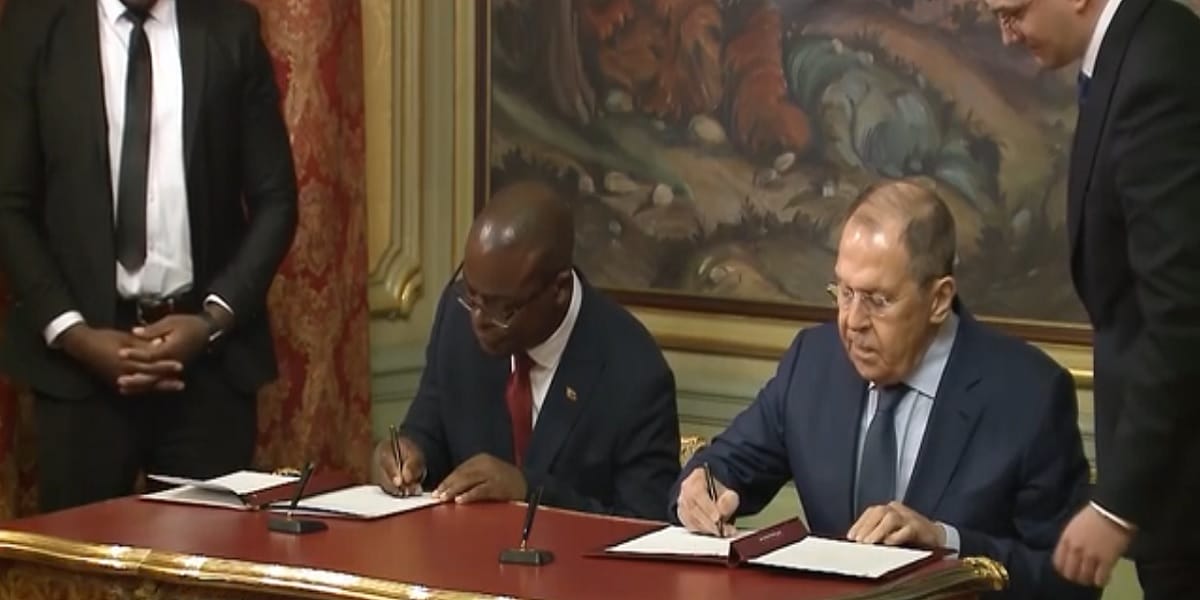
Zimbabwe is awaiting the outcome of its application to join BRICS, Amon Murwira, Zimbabwean Minister of Foreign Affairs and International Trade has announced at the meeting in Moscow with Russian Foreign Minister Sergey Lavrov, during which they agreed cooperation expansion between the two countries in the fields of education, space, information and communication technologies, energy, and geological exploration.
Zimbabwe’s bid to join BRICS has sparked debate about the country’s economic prospects and governance issues. The government believes BRICS membership could unlock trade and investment opportunities, bypassing Western financial institutions.
However, Zimbabwe’s economic struggles, such as corruption, policy inconsistency, and poor governance, suggest this ambition may be unrealistic. Despite its natural resources, including minerals like lithium, Zimbabwe has failed to leverage these assets for sustainable economic growth, mainly due to mismanagement.
While BRICS offers an alternative to Western-dominated financial systems, Zimbabwe’s inclusion would not necessarily lead to substantial benefits. The country has a history of poor debt repayment and strained relations with China, one of BRICS’ key members, which raises doubts about its ability to attract meaningful financial support.
Additionally, joining BRICS would not address Zimbabwe’s core economic challenges, such as power shortages, outdated infrastructure, and weak industrial production.
Furthermore, Zimbabwe’s economy is too small to significantly contribute to BRICS, and its inclusion may not align with the strategic goals of the bloc. BRICS aims to strengthen its collective global influence, and admitting Zimbabwe, an economically struggling nation, could undermine its credibility. Geopolitically, Zimbabwe’s efforts to align with emerging powers are unlikely to be enough to outweigh the economic advantages other candidates, like Indonesia or Nigeria, bring to the bloc.
Ultimately, Zimbabwe’s push for BRICS membership may be more of a political gesture than a strategic move. To improve its economic standing, the government must prioritize domestic reforms, tackle corruption, and restore investor confidence, rather than focusing on external alliances.



