

The New Development Bank (NDB), the financial arm of the BRICS alliance, is actively reviewing the membership applications of Ethiopia and Indonesia—a move that could further accelerate the global shift away from the US dollar. This development comes amid growing interest from emerging economies in joining alternative financial structures that reduce reliance on Western institutions.
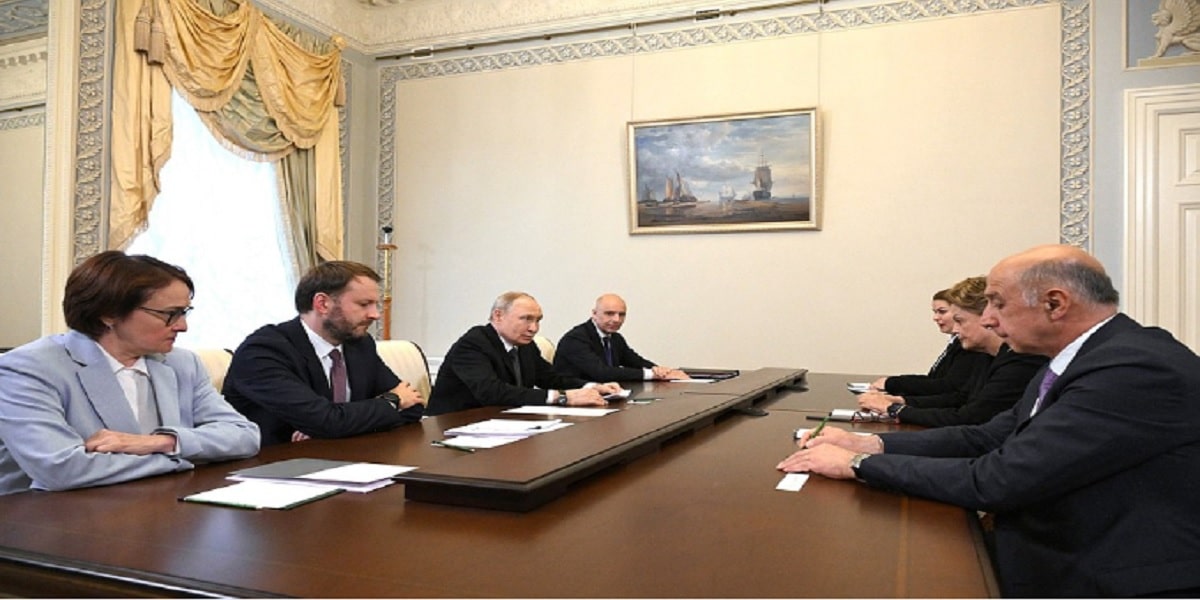
Russian President Vladimir Putin met with NDB President Dilma Rousseff during the St. Petersburg International Economic Forum to discuss the bank’s expanding role. Putin congratulated Rousseff on her re-election, underscoring the bloc’s appreciation for her leadership.
“Of course, there are issues that require special attention,” he noted, citing the “expansion of settlement capabilities in national currencies and further joint efforts to create a digital platform for settlements and investments.”
Rousseff, reaffirming her commitment to these priorities, said: “For my part, I will do everything possible and make every effort to perform my duties in this position as best as I can.”
She emphasized the importance of both digital infrastructure and membership growth, highlighting that “Uzbekistan and Colombia have already been accepted,” while Ethiopia and Indonesia are next in line.
This potential expansion aligns with BRICS’ broader de-dollarization agenda. The alliance is working to reduce the dominance of the US dollar in global trade by promoting local currencies. Since 2011, BRICS members have been experimenting with alternative payment systems, notably when China purchased oil using the gold-backed yuan. Over 70 countries have since engaged in non-dollar trade settlements, reflecting a deepening trend.
The upcoming 17th BRICS Summit in Rio de Janeiro, scheduled for July 6–7, could mark a turning point. If the bloc proposes a unified strategy to sideline the dollar, it may trigger profound changes in the global financial system. “It’s no longer about how the US dollar will be brought down, but when,” analysts suggest.
For countries like Ethiopia and Indonesia, joining the NDB offers more than development funding—it signals alignment with a reshaped world order where financial sovereignty and multipolarity are gaining traction.



