

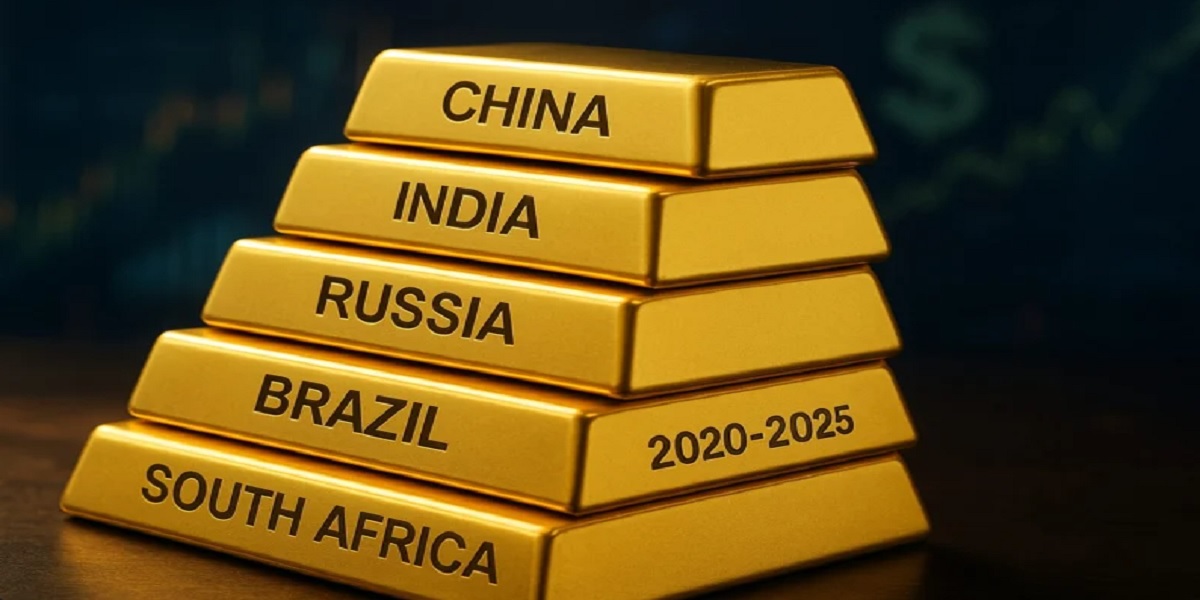
BRICS’ gold purchases between 2020 and 2025 have reached a staggering 870 tonnes, marking one of the most significant shifts in global reserve strategy in modern financial history. This surge, driven by China, India, Russia, and Brazil, is accelerating the global pivot away from US dollar dominance and reshaping international monetary architecture.
China led the five-year acquisition with 370 tonnes, including a historic 225-tonne jump in 2023—its largest annual purchase in nearly 50 years. India followed with 250 tonnes, pushing its total reserves to 880 tonnes. Russia added an estimated 225 tonnes, while Brazil contributed 20 tonnes, including a notable 15-tonne purchase in September 2025.
These collective moves align with broader global trends: for three consecutive years, central banks worldwide surpassed 1,000 tonnes in annual gold purchases, adding 1,045 tonnes in 2024 alone. Such sustained demand has reinforced a price floor and signaled deep structural changes in reserve management.
The US dollar’s share of global reserves has fallen from 70% two decades ago to roughly 58–60% today. BRICS states have dramatically reduced dollar use in trade, dropping from 85% in 2015 to 59% in 2023, mirroring their gold accumulation.
Mining investor Frank Giustra captured the moment succinctly:
“We’re now, believe it or not, in the era of hard money. If you own paper gold, you do not own gold. When the crunch comes, it will not be there.”
Survey data reinforces this shift: 76% of central banks expect to increase gold holdings in the next five years, while 73% anticipate a reduced role for the dollar.
China and Russia now control 74% of BRICS’ total gold reserves, giving them outsized influence in the physical gold market. Even as gold makes up only 5% of China’s vast reserve portfolio, its consistent buying signals long-term strategic hedging—not short-term speculation.
The World Gold Council notes a widening gap in publicly reported data:
“The IMF IFS data only reflects 34% of our total official sector demand estimate for 2024 – down from 47% last year.”
As BRICS restructures its reserves, liquidity in the open gold market continues to tighten. Many analysts expect central bank demand to remain above 1,000 tonnes per year, especially as countries build parallel financial systems to reduce reliance on US-denominated assets.