

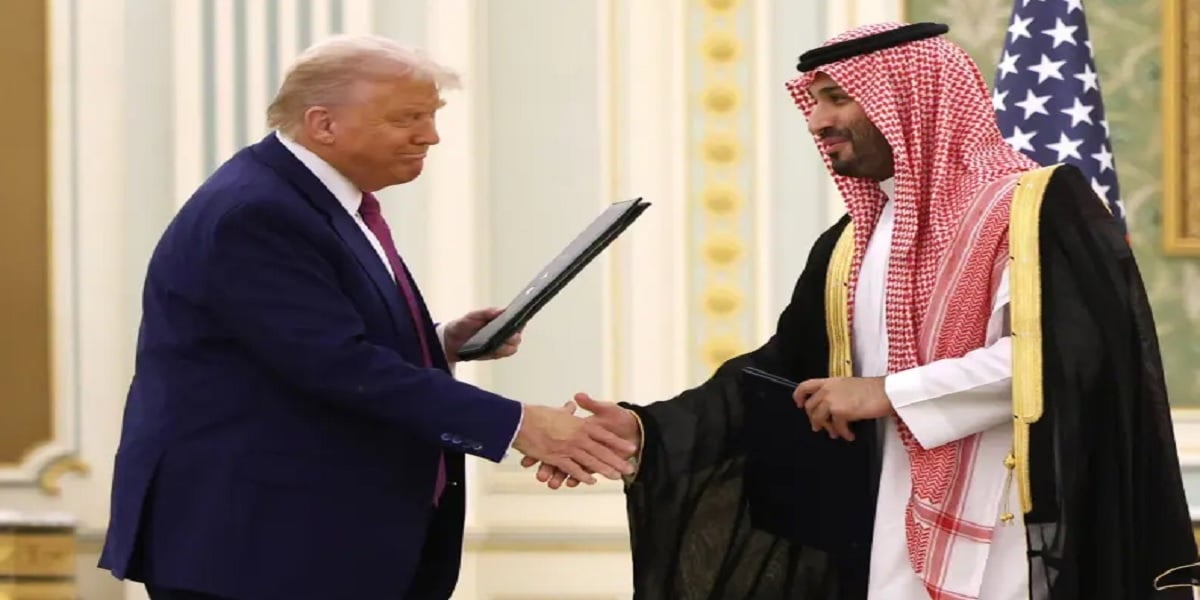
In a landmark geopolitical shift, Saudi Arabia has signed a sweeping $600 billion strategic economic partnership with the United States, signaling a step back from its tentative alignment with the BRICS bloc. The agreement, sealed during President Donald Trump’s visit to Riyadh in 2025, marks a major recalibration of Saudi foreign policy and its global economic strategy.
The deal spans cooperation in energy, mining, defense, and advanced technologies, underscoring the kingdom’s priority to deepen ties with Washington amid growing East-West tensions.
“This partnership reaffirms our long-standing alliance and shared vision for economic security and innovation,” President Trump stated during a joint press conference with Crown Prince Mohammed bin Salman.
This development comes amid growing strain between the U.S. and the BRICS alliance, especially with China, which has been the subject of escalating tariffs and political friction. Washington’s aggressive stance includes a proposed 150% tariff on BRICS countries should they proceed with efforts to replace the U.S. dollar in global trade. That pressure appears to have weighed heavily on Riyadh’s strategic calculations.
Though Saudi Arabia was among the first countries invited to join the expanded BRICS, it never formalized its membership. Now, with this new pact, it’s increasingly clear where the kingdom is placing its bet.
Diplomatic insiders say Riyadh remains cautious not to sever ties with China outright, especially given their robust energy trade. Still, the U.S. partnership signals that Saudi Arabia values its military and technological alliance with Washington more than its eastern overtures—at least for now.
As the global order continues to shift, Saudi Arabia’s decision underscores a key reality: when the pressure mounts, the kingdom is choosing to anchor itself to the West.