
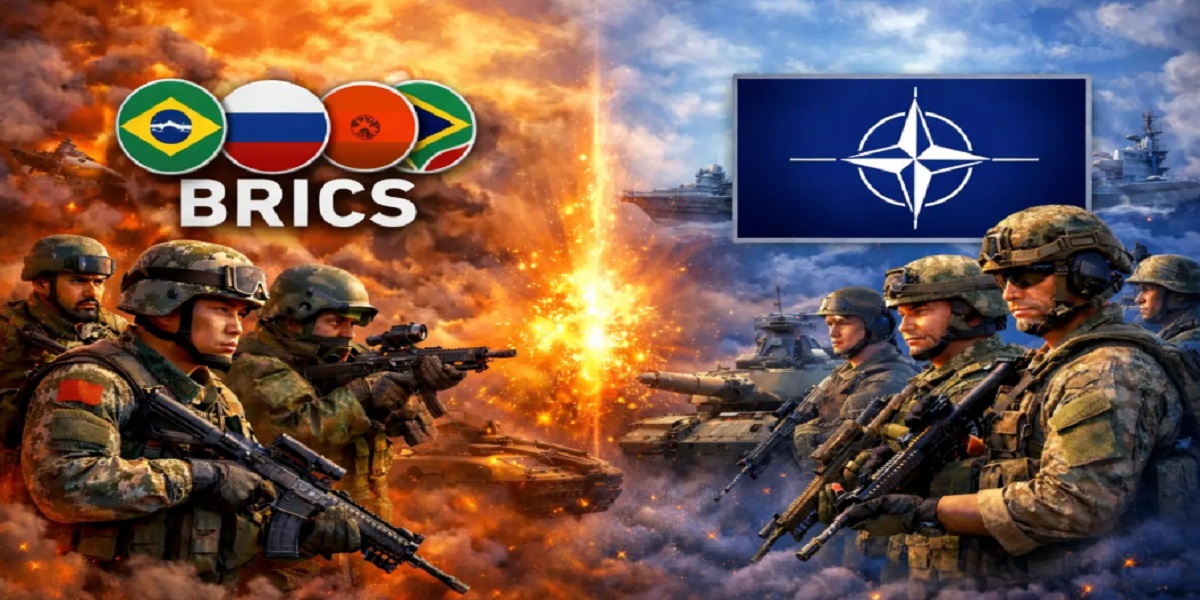
The expanding rivalry between BRICS and NATO is reshaping global security debates, raising a central question: who is more powerful militarily in 2025? A closer comparison shows a stark contrast between technological dominance and sheer military mass.
With the accession of Iran, Indonesia, and Egypt, the expanded BRICS bloc now fields more than 5 million active troops. China and India alone account for nearly 3.5 million soldiers, giving the group overwhelming manpower depth.
NATO’s 32 members, by comparison, maintain around 3.3 million active personnel, relying on professional forces, interoperability, and rapid deployment rather than numerical superiority.
The most striking imbalance lies in defence spending. NATO’s collective military budget exceeds $1.4 trillion, with the United States contributing roughly $935 billion. BRICS defence expenditure, estimated at about $480 billion, is far lower in nominal terms. However, BRICS countries benefit from lower production costs and purchasing power parity, allowing them to sustain large forces and equipment inventories at reduced expense.
In nuclear capabilities, strategic parity prevails. Russia’s estimated 5,580 warheads, combined with China’s 600 and India’s 172, give BRICS a total arsenal exceeding 6,350 nuclear weapons. NATO’s nuclear forces, held by the US, UK, and France, total around 5,560 warheads, ensuring continued mutual deterrence rather than dominance.
On land, BRICS holds a decisive advantage. China, Russia, India, and Egypt together operate tens of thousands of tanks, far outnumbering NATO’s combined armoured forces. Air power, however, remains NATO’s strongest domain. The alliance’s advanced fighter fleets, stealth aircraft, and integrated air defence systems provide a technological edge that BRICS has yet to match fully.
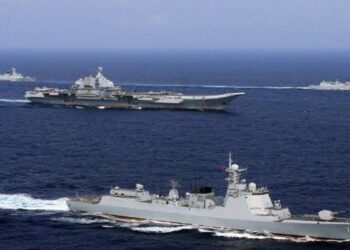
Naval strength highlights a similar divide. China leads globally in ship numbers, but NATO controls the seas through superior tonnage and aircraft carrier strike groups.
As one analyst summarised, “NATO leads in technology and global reach, while BRICS increasingly dominates in manpower, industrial depth, and geographic scale.” In 2025, the balance of power is less about outright superiority and more about competing models of military strength shaping a multipolar world.