
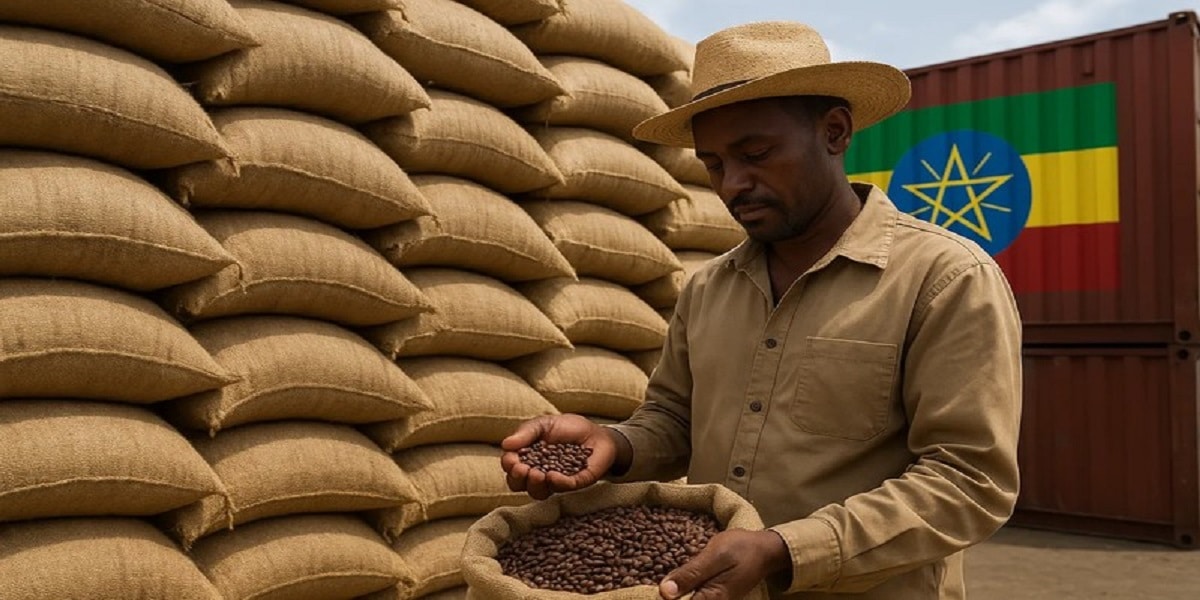
Ethiopia, the birthplace of Arabica coffee, is reaffirming its global leadership in premium coffee exports with a remarkable surge in both earnings and market reach. Between July and September, the country exported 113,542 tons of coffee, earning $762.75 million — a 47% increase compared to the same period last year.
According to Adugna Debela, Director General of the Ethiopian Coffee and Tea Authority, “Ethiopia exceeded its coffee earnings projections by 23 percent in the first fiscal quarter, reflecting both improved quality and market diversification.”
While Europe and the Middle East continue to dominate as primary buyers, the growing demand from Asian markets is reshaping Ethiopia’s export landscape.
Germany, Saudi Arabia, and Belgium remain the top importers, together accounting for nearly half of Ethiopia’s total coffee exports. Germany imported 20,793 tonnes worth $138.18 million, while Saudi Arabia and Belgium purchased 16,088 tonnes ($102.18 million) and 13,910 tonnes ($93.45 million) respectively.
The sharp rise in export earnings, despite only a modest 3% increase in shipment volume, highlights Ethiopia’s progress in enhancing value through quality control and improved logistics. New data and traceability systems introduced by the Ethiopian Coffee and Tea Authority now enable real-time monitoring and transparent certification — features highly valued in European and Asian markets that prioritize sustainable sourcing.
Government reforms aimed at facilitating direct trade between Ethiopian producers and global buyers have further strengthened the industry. By cutting intermediaries, local farmers and cooperatives are earning higher prices, creating a more equitable and competitive value chain.
Beyond traditional markets, China, Japan, South Korea, and the UAE are emerging as promising destinations. China’s rapidly expanding coffee culture — driven by specialty cafés and young consumers — has positioned it as a vital growth market for Ethiopian beans.
As global coffee consumption patterns evolve, Ethiopia’s diversification strategy and commitment to quality and digital transformation are redefining its place in the international coffee trade, ensuring resilience and sustainable growth for years to come.