

Iran has taken a major step toward sustainable agriculture with the unveiling of advanced smart farming systems capable of reducing water consumption by up to 30 percent while significantly improving crop productivity.
The innovations were introduced by Tehran University and presented at the 26th Exhibition of Research, Technology and Tech Bazaar Achievements, according to Mehr News Agency.
The newly developed solutions focus on three core areas: smart irrigation management, automated greenhouse operations, and intelligent crop and orchard monitoring. These systems combine high-precision local sensors with satellite data to continuously assess environmental conditions. The collected information is transmitted to a central control unit, which then issues real-time operational commands tailored to the precise needs of plants.
Tehran University reported that the use of accurate measurement and timed irrigation has already delivered tangible results. “This method has brought up to 23 percent water savings for customers such as municipalities and natural resource organizations,” representatives of the university’s Science and Technology Park said.
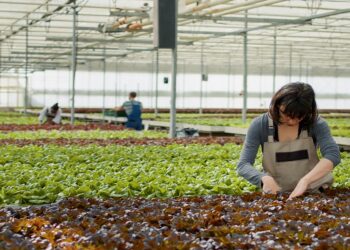
One of the most impactful innovations is greenhouse automation. By automatically managing irrigation, pesticide spraying, and environmental adjustments, the system minimizes human error—a key factor behind significant annual crop losses in Iran.
Leveraging artificial intelligence and precision instruments, the technology has achieved at least a 63 percent increase in production efficiency, marking a major boost for greenhouse farming.
In addition, smart garden and agricultural systems are customized to the unique characteristics of individual farms and orchards. Advanced sensors and targeted monitoring allow farmers to respond to specific soil, climate, and crop requirements, further optimizing yields while conserving resources.
Beyond domestic application, Tehran University announced plans to cooperate with Russia on launching a joint production line for these smart agriculture systems. This move signals growing international collaboration in agricultural innovation and highlights Iran’s ambition to position itself as a regional leader in water-efficient farming technologies.