
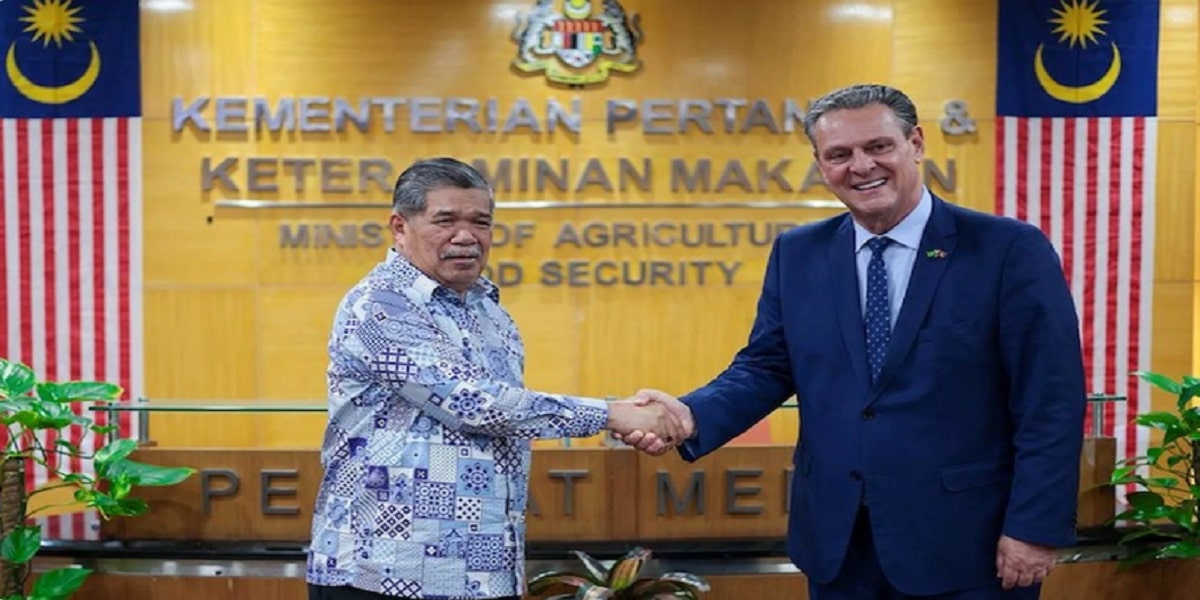
Brazil has resumed chicken meat exports to Malaysia and opened six new markets for national agribusiness products, marking a significant achievement for the country’s trade diversification strategy. The announcement came following a meeting between Brazil’s Minister of Agriculture and Livestock, Carlos Fávaro, and Malaysia’s Minister of Agriculture and Food Security, Mohamad Sabu.
According to Agência Gov, the breakthrough results directly from President Luiz Inácio Lula da Silva’s recent mission to Southeast Asia, aimed at strengthening Brazil’s role in global food security and expanding market access in the region.
The reopening of the Malaysian market follows its previous suspension due to sanitary concerns related to Highly Pathogenic Avian Influenza (HPAI). Minister Fávaro highlighted the unprecedented speed of the negotiations, saying:
“The main piece of news is the resumption of trade in Brazilian chicken with Malaysia, a process that could take 12 months, but we managed to bring it forward to just three.”
Beyond poultry, Malaysia also approved imports of wild-caught and farmed fish, sesame seeds, melons, apples, and powdered eggs from Brazil. The countries also advanced discussions for an audit mission that will assess 16 Brazilian pork processing plants, potentially paving the way for further exports.
These agreements enhance Brazil’s strategic footprint in Southeast Asia, a region seen as key to its long-term trade diversification efforts.
In 2024, bilateral trade between Brazil and Malaysia reached US$487.2 million, with US$346.4 million in exports and US$140.9 million in imports. Malaysia now ranks 23rd among destinations for Brazilian goods, while agribusiness exports—led by raw sugar, corn, and cotton—remain a cornerstone of bilateral trade.
With the new deals, Brazil continues to position itself as a trusted global supplier of high-quality, sustainable food products.