
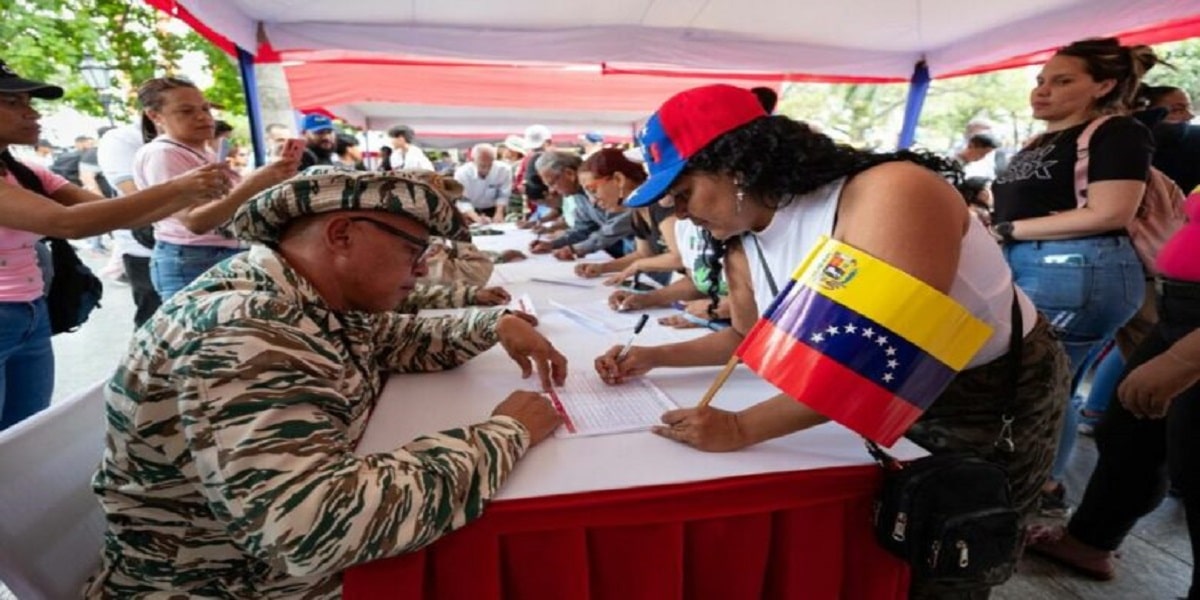
Venezuela has announced a large-scale mobilization of its armed forces in response to what it calls the “imperialist threat” posed by a growing US military presence in the Caribbean. Defense Minister Vladimir Padrino López confirmed that land, air, naval, and reserve forces will take part in exercises through Wednesday under the direct order of President Nicolás Maduro.
“This is a defensive operation to optimize command, control, and communications in the face of aggression,” Padrino López said, describing the move as part of Maduro’s broader Independence Plan 200 — a strategy integrating conventional forces, militias, and police units to protect the nation.
The mobilization follows the arrival of the USS Gerald R. Ford, America’s largest aircraft carrier, to the US Southern Command area of operations. The carrier strike group includes two guided-missile destroyers, a command ship, and more than 4,000 sailors, in addition to nine air squadrons.
The Pentagon says the deployment supports anti-drug trafficking operations, though Caracas insists it represents an attempt to destabilize the Venezuelan government.
Washington has reinforced its regional footprint in recent months, with F-35 jets, MQ-9 drones, and thousands of US personnel stationed across Puerto Rico and nearby territories. Meanwhile, Venezuelan authorities are emphasizing national unity, with the Bolivarian Militia — a reserve force of civilians founded by the late Hugo Chávez — joining the drills.
As tensions rise, observers warn that a misstep could escalate into a dangerous confrontation.
“The situation marks one of the most serious military standoffs in the Caribbean in recent years,” said a Latin American defense analyst, noting that “both sides are testing limits.”
Whether this mobilization leads to direct confrontation or renewed diplomatic efforts remains uncertain, but the region is entering a volatile phase reminiscent of past Cold War-era power plays.