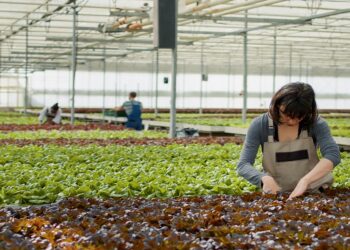


BRICS countries—Brazil, Russia, India, China, and South Africa—are reshaping global agriculture through strategic investment in cutting-edge technologies, offering sustainable solutions for food production and challenging long-dominant agricultural powers.
According to agricultural researcher Hossein Shirzad, BRICS is “pioneering a multipolar, innovation-driven global agricultural order” through the adoption of precision farming, biotechnology, and data analytics.
China’s widespread use of satellite imagery and drones has revolutionized crop monitoring and resource allocation, while Brazil’s genetically modified pest-resistant soybeans have boosted yields and global exports.
“These countries are not just increasing their own productivity—they are setting new global benchmarks for sustainable farming,” Shirzad noted in his commentary published by Mehr News Agency.
Technological advances from BRICS countries are influencing global supply chains. Brazil’s biotechnology breakthroughs have secured its position as a leading soy and beef exporter, while China has become a major player in grain and vegetable markets. These shifts are challenging traditional agricultural exporters and prompting others to adapt or fall behind.
Yet the technological transformation is not without its drawbacks. Concerns have been raised over environmental degradation linked to intensive farming in Brazil and soil and water pollution in China. The growing digital divide also risks leaving smallholder farmers behind, exacerbating inequality in rural areas.
Despite these challenges, BRICS innovations are finding their way into other developing nations, expanding access to sustainable agricultural technologies. Dr. Shirzad emphasized, “With appropriate regulatory frameworks and international cooperation, BRICS can help ensure these technologies serve all, not just the powerful.”
The BRICS+ platform also opens new opportunities for collaboration, market access, and technology diffusion. As Iran considers its own agricultural development strategy, engagement with BRICS+ markets could offer a gateway to emerging global supply chains and investment flows, especially through institutions like the New Development Bank.
Ultimately, BRICS nations are not only modernizing agriculture—they’re redefining its future.