

French President Emmanuel Macron has issued a stark warning against the growing fragmentation of the global order, cautioning that neither the G7 nor BRICS should evolve into opposing geopolitical blocs.
Speaking on Thursday at the Élysée Palace during his annual address to French ambassadors, Macron called for renewed multilateralism amid rising tensions between major powers and what he described as an erosion of global governance.
In remarks that included some of his strongest criticism of Washington to date, Macron accused the United States of distancing itself from allies and the international rules it once championed. According to a statement released by the Élysée Palace, he argued that the world is increasingly tempted by division, with multilateral institutions “functioning less and less effectively” in the current geopolitical climate.
Macron warned against what he termed a resurgence of “new colonialism and new imperialism,” saying global politics is drifting toward spheres of influence dominated by powerful states.
“Global governance is essential at this moment,” he stressed, adding that ordinary citizens are now questioning whether Greenland could be invaded or whether Canada might face pressure to become the 51st US state.
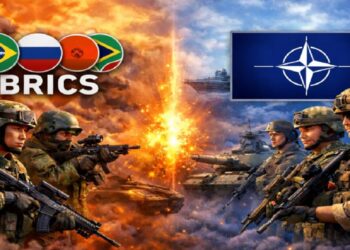
A key focus of the speech was Macron’s rejection of bloc-based thinking. He cautioned against transforming the G7 into an anti-China forum or an anti-BRICS alliance, while also urging emerging economies not to allow BRICS to become an anti-G7 club.
“It is essential to do everything possible to prevent the fragmentation of the world into antagonistic blocs,” he said, underscoring France’s commitment to dialogue across geopolitical lines.
The address comes at a sensitive moment for Europe, which is struggling to respond cohesively to developments ranging from Venezuela to concerns over US rhetoric on Greenland. Analysts cited by Politico EU noted that Macron portrayed a world shaped by predatory powers seeking dominance, with Europe increasingly caught between the United States, China, and Russia.
Macron also criticised Russia as a “destabilising power” due to its actions in Ukraine and beyond, while raising concerns about China’s trade practices, echoing familiar EU economic grievances. Despite these criticisms, his overarching message remained clear: global stability depends on cooperation rather than confrontation.
As France prepares its 2026 diplomatic agenda and an upcoming G7 presidency, Macron’s speech reflects Europe’s strategic dilemma—seeking sovereignty and relevance in a world of intensifying great-power rivalry, while warning that unchecked division could undermine the international system itself.