
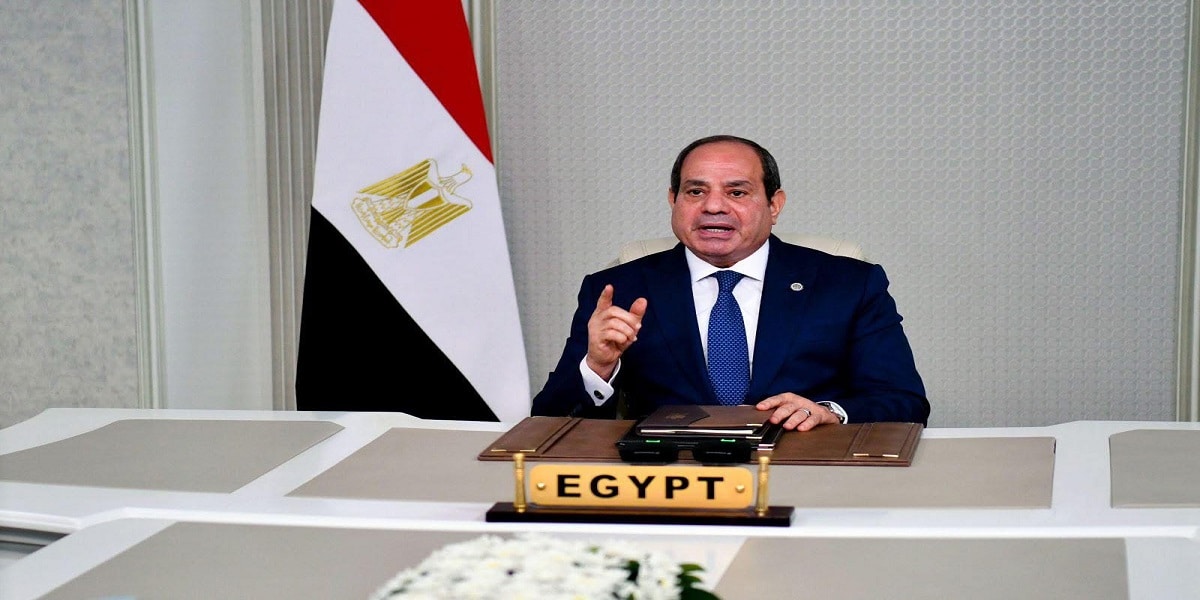
Egyptian President Abdel Fattah Al-Sisi delivered a strong message during an extraordinary BRICS summit on Monday, denouncing what he described as “flagrant double standards” in the international system and warning that Israel’s assault on Gaza has become a “war of starvation.”
Speaking via videoconference at the invitation of Brazil, Sisi accused Israel of committing grave violations.
“For nearly two years, Israel has practised the most heinous forms of killing and terror, using starvation and deprivation of health services as a weapon against civilians,” he said. “This is no longer a war to achieve political goals or release hostages, but a war of starvation and to liquidate their just cause.”
The Egyptian leader highlighted that the United Nations has declared a state of famine in Gaza, calling it an unprecedented humanitarian catastrophe. He also reiterated Egypt’s “categorical rejection” of any attempt to displace Palestinians, stressing that such a move would “kill the two-state solution and expand the conflict.”
Beyond Gaza, Sisi used the summit to outline Egypt’s priorities within BRICS, including boosting trade in local currencies, advancing joint projects in renewable energy and infrastructure, and pushing for reforms in global financial governance. He pointed to the U.N. Security Council as a “stark example” of international paralysis and underscored the need for structural reform, including changes to the veto system.
On the same day, Sisi hosted US Central Command chief General Brad Cooper in Cairo. According to Egypt’s presidency, the two discussed de-escalation efforts in Gaza, the importance of mediation involving Egypt, the U.S., and Qatar, and ways to secure a truce, release hostages, and enable humanitarian aid deliveries.
Their talks also addressed wider regional security and the “Bright Star 2025” military exercises, underscoring the strategic nature of Egyptian-American defense cooperation.
With his dual focus on BRICS and Washington, Sisi positioned Egypt as both a voice of the Global South and a mediator seeking to balance diplomacy and security amid one of the Middle East’s most pressing crises.