
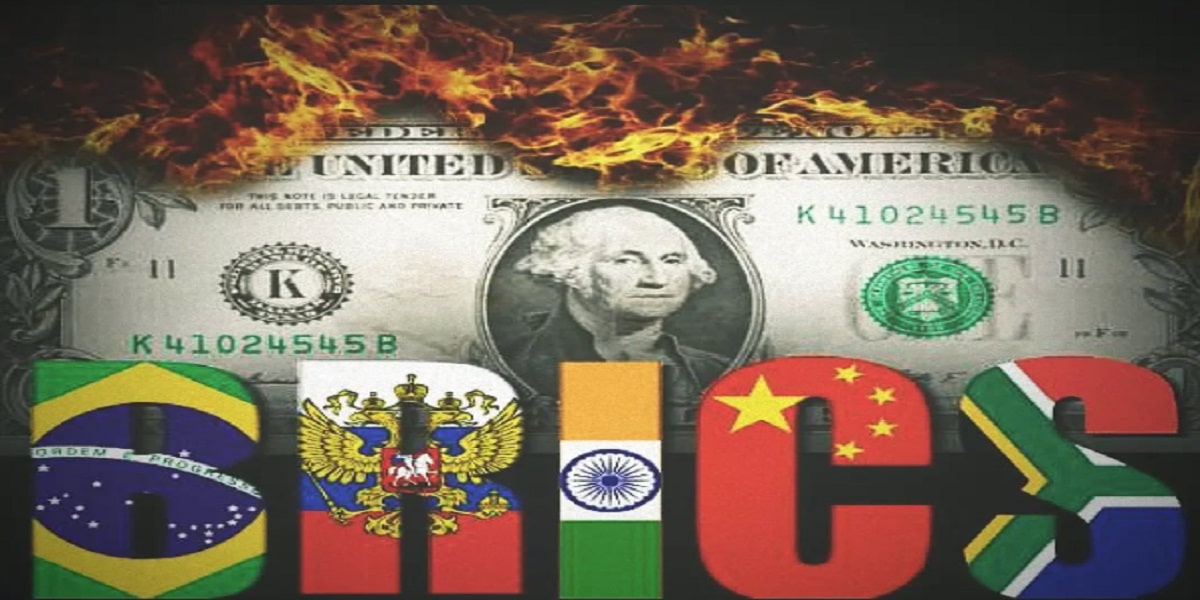
The BRICS bloc—Brazil, Russia, India, China, and South Africa—is steadily reshaping global finance as it builds alternatives to the U.S.-dominated monetary system. While the U.S. dollar remains the world’s primary reserve and trade currency, its use as a foreign policy instrument through sanctions and restrictions has prompted many nations of the Global South to explore new financial channels.
Together, BRICS countries represent nearly half the global population and a significant share of global GDP. Four of the world’s ten largest foreign exchange reserve holders—China, India, Russia, and Brazil—are part of the group. This scale gives the bloc enough leverage to gradually erode the dollar’s monopoly.
“The BRICS countries are not seeking to topple the U.S. dollar overnight, but to build financial resilience and independence,” said a Kremlin adviser, Yury Ushakov, referring to BRICS Pay, a proposed blockchain-based payment system that could operate outside the Western-controlled SWIFT network.
He described it as “a system based on state-of-the-art tools such as digital technologies and blockchain, free from political interference.”
The New Development Bank (NDB), founded by BRICS, has also been instrumental in diversifying financial flows. It now issues loans in local currencies, euros, and Swiss francs—reducing exposure to the dollar while encouraging trade invoicing in national currencies.
Russia and China now conduct most of their bilateral trade in roubles and renminbi, while India purchases Russian oil in rupees. Similarly, Iran settles trade with China and Russia in rials and local currencies, signaling a regional shift toward de-dollarisation.
Digital finance is another frontier. China’s e-CNY and Russia’s digital rouble have demonstrated that digital currencies can bypass traditional payment constraints. The BRICS’ large gold reserves further underpin efforts to stabilize and back local currencies.
Still, analysts acknowledge that dethroning the dollar is a long-term process. The U.S. Treasury market’s liquidity and America’s rule-of-law protections continue to make the dollar an attractive asset. However, as Brazilian President Luiz Inácio Lula da Silva stated earlier this year, “Every night I ask myself why all countries have to base their trade on the dollar.”
Gradual diversification—not replacement—appears to be the realistic goal. The future may bring a multipolar monetary system, where the yuan, euro, digital currencies, and gold-backed assets collectively share the global stage.