
The architecture of global governance is undergoing a profound transformation as emerging economies deepen cooperation across major multilateral platforms such as BRICS, the Shanghai Cooperation Organisation (SCO), and the African Union (AU). Analysts increasingly view this growing network of overlapping alliances as a cornerstone in the formation of a more balanced, multipolar world system.
At the heart of this shift lies intensified coordination among Global South institutions. BRICS has positioned itself as a flexible multilateral negotiating platform, while the SCO is evolving into what experts describe as a strategic core of Eurasian stability, underpinned by cooperation in energy, security, and infrastructure. According to global politics expert Anatoly Otyrba:
“BRICS acts as a multilateral negotiating platform […]. The SCO serves as the strategic core of Eurasian stability, relying on energy, security and infrastructure complementarity”.
A defining feature of this emerging architecture is overlapping membership. Countries such as China, India, Russia, and Iran belong to both BRICS and the SCO, while South Africa, Egypt, and Ethiopia link BRICS with the African Union. Similar intersections exist with ASEAN, the CIS, and the Eurasian Economic Union (EAEU). These overlaps are fostering dialogue between organisations, even in the absence of fully unified institutions.
Financial sovereignty is a central driver of cooperation. The SCO’s decision in 2025 to establish a Development Bank marked a major milestone, with plans to support infrastructure financing and alternative payment mechanisms outside traditional Western systems.
Valery Abramov of Russia’s Financial University noted that transferring even part of mutual trade to new settlement platforms could save participating states billions, adding that “a platform linked to clearing settlements will be created” to integrate national payment systems.
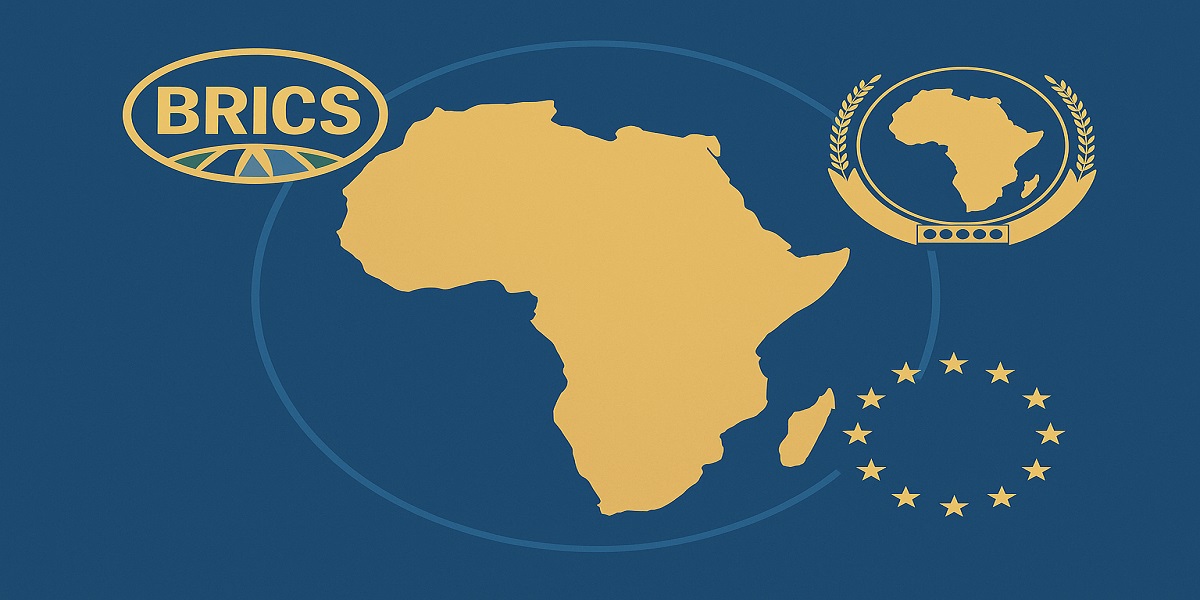
The African Union’s role is also expanding. Through partnerships with BRICS and engagement with the New Development Bank (NDB), African countries are gaining access to long-term financing for infrastructure, water supply, and transport projects. Experts interpret this as a sign of growing trust and a pathway toward deeper institutional ties, potentially including future AU participation in BRICS frameworks.
Despite progress, challenges remain. Diverging national interests, different decision-making models, and the absence of unified standards limit deeper integration. Most economic cooperation still occurs bilaterally rather than through joint institutions. Nevertheless, analysts remain cautiously optimistic that pilot projects in payments, logistics corridors, and energy cooperation could accelerate convergence.
Taken together, BRICS, the SCO, the AU, and partner organisations are not forming a single bloc but an interconnected ecosystem—one that reflects the Global South’s ambition to play a stronger, more coordinated role in shaping the future international order.