

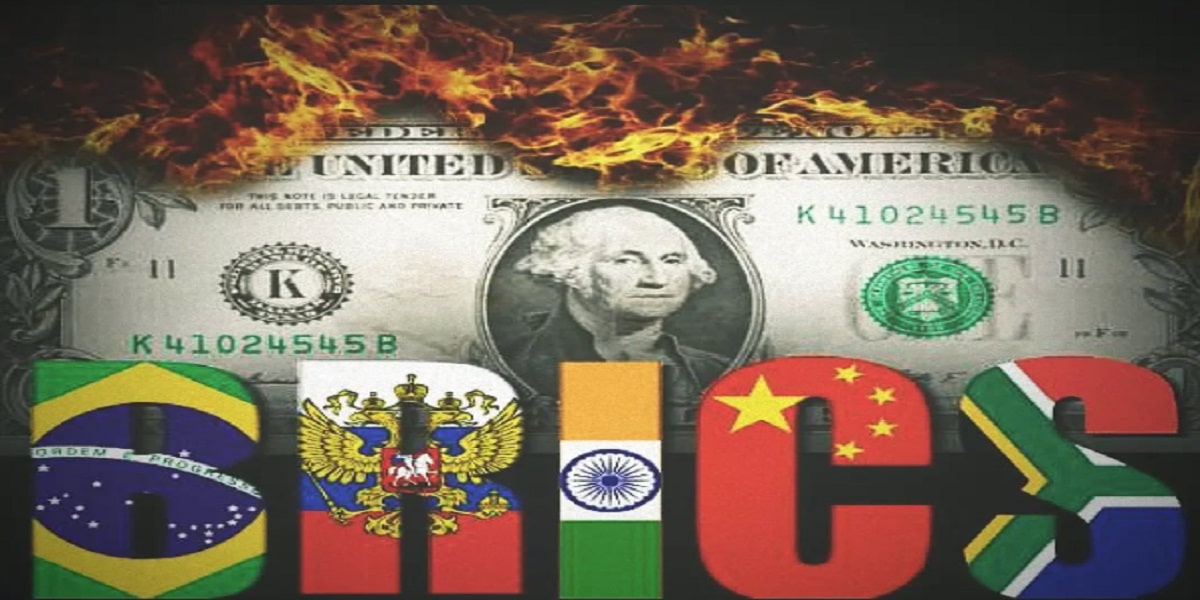
For nearly eight decades, the U.S. dollar has served as the backbone of international trade. From Brazilian soybeans to Indian oil imports, nearly 80% of global commerce still flows through the greenback—even when no American party is involved. But the BRICS alliance is now asking the question that has long been avoided: why must the dollar remain supreme?
The bloc—originally Brazil, Russia, India, China, and South Africa, and now expanded to include Saudi Arabia, Iran, Egypt, Ethiopia, and the UAE—represents almost half of humanity and a growing share of global GDP. United by a desire for greater autonomy, BRICS members are challenging the “exorbitant privilege” the U.S. enjoys.
“Too much of the world’s economy depends on Washington’s whims,” one analyst noted, pointing to how U.S. sanctions and Federal Reserve policies reverberate far beyond American borders. For Russia, whose reserves were frozen after the Ukraine invasion, the dollar’s grip has become both a financial and geopolitical liability.
Practical moves are already underway. Russia and China now settle most trade in yuan, while India has experimented with oil purchases in rupees. Brazil and China, meanwhile, struck an agreement to trade directly in reais and yuan. These deals may still be small in global terms, but they mark what BRICS leaders call “the beginning of de-dollarization.”
Yet the road to reducing dollar dominance is not straightforward. Most BRICS currencies lack convertibility and liquidity, making them unattractive to global investors. Political rivalries also complicate the picture. As one observer put it, “India and Brazil don’t want to swap dollar dependence for yuan dependence.”
Experts widely agree the dollar won’t vanish soon. Deep U.S. capital markets, political stability, and the trust built over decades remain unmatched. Still, the symbolic shift is significant. Paying for oil in rupees or soybeans in yuan signals more than trade innovation—it signals a world slowly breaking free from America’s financial orbit.
In the end, BRICS’ push is less about toppling the dollar outright and more about carving out alternatives. That, in itself, could reshape the financial order for decades to come.