
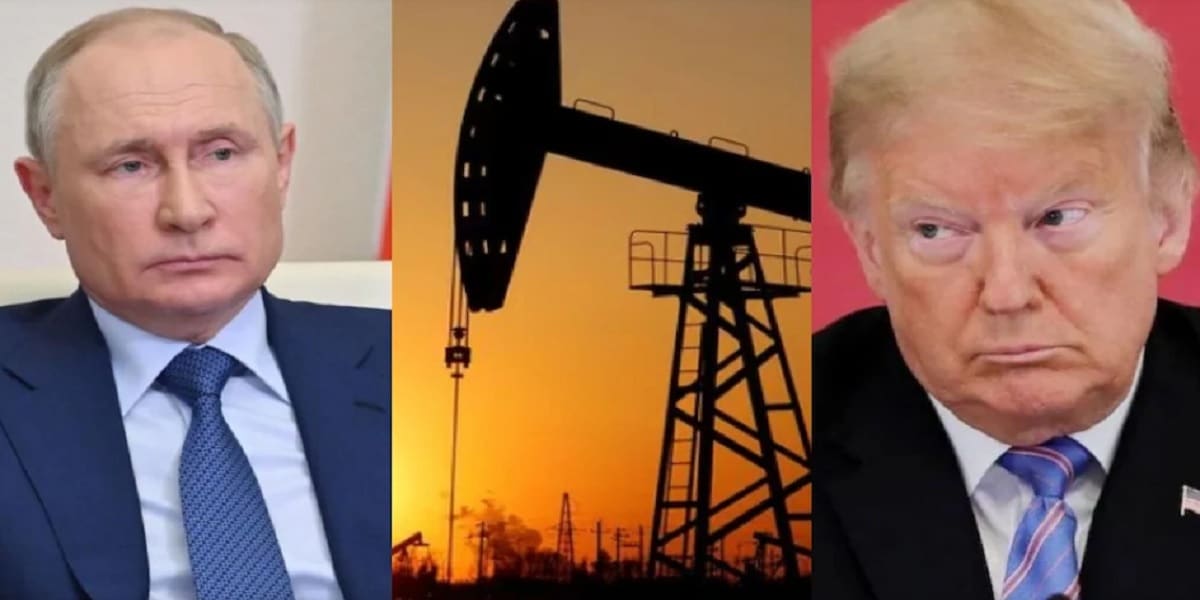
Over the past two years, Washington has intensified its campaign against nations purchasing Russian oil, arguing that such trade “funds Moscow’s aggression.” Yet, for many in the Global South — especially within the BRICS bloc — this standoff is not just about oil. It’s about sovereignty, development, and the right to economic self-determination in a system long dominated by Western interests.
India has emerged as a central player in this geopolitical tug-of-war. Since Western sanctions began in 2022, Russia has become India’s largest crude supplier, accounting for 35–36% of total imports in 2023–24 — a sharp rise from just 2% before the Ukraine conflict. With Russian crude priced $8–12 per barrel cheaper than Brent, India has saved billions while keeping domestic fuel costs stable amid 5.1% inflation.
Despite persistent U.S. pressure, New Delhi remains firm. As India’s Trade Secretary Rajesh Agarwal stated, “Energy decisions will depend on price competitiveness and national interest.” His comment underscores India’s stance that economic pragmatism, not political coercion, should guide policy.
Washington’s campaign extends to allies like Japan, which still relies on Russian LNG for about 9% of its energy needs. Although Japan initially halted Russian crude imports, it later received a U.S. waiver to continue buying from the Sakhalin-2 project — a move many view as a sign of selective enforcement. Such inconsistencies expose what some analysts call “sanctions diplomacy,” where rules bend for allies but tighten for Global South nations asserting independence.
For Russia, redirecting exports to Asia has been transformative. By mid-2024, less than 15% of its oil went to Europe, replaced by booming trade with India and China. These shifts have strengthened BRICS’ position as an energy powerhouse, accounting for nearly 45% of global oil production.
The growing use of local currencies like the yuan and rupee in oil settlements signals a direct challenge to the U.S. dollar’s dominance — a cornerstone of the post-1970s petrodollar system.
Ultimately, U.S. sanctions may be accelerating the very multipolarity Washington sought to contain. As the BRICS nations expand cooperation through energy platforms and alternative payment systems, they’re not merely buying oil — they’re rewriting the rules of global power.