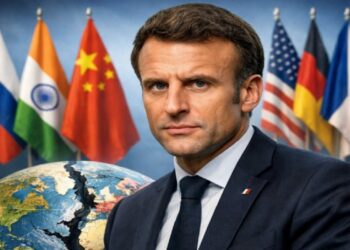


At the 17th BRICS Summit in Rio de Janeiro, leaders and representatives from BRICS and partner countries reaffirmed their commitment to strengthening multilateralism, expanding trade, and shaping the global governance of artificial intelligence (AI).
The summit, themed “Strengthening Multilateralism, Economic-Financial Affairs, and Artificial Intelligence,” brought together key voices from the Global South, calling for equitable development and a reformed world order.
For the first time, Indonesia participated as a full BRICS member. President Prabowo Subianto called for deeper economic cooperation and an expanded role for the BRICS New Development Bank (NDB). Echoing this sentiment, Russian Foreign Minister Sergey Lavrov stated:
“The share of BRICS countries in Russian trade is constantly growing and amounted to more than 48 per cent at the end of 2024, with 90 per cent of mutual settlements being carried out in national currencies.”
AI governance took center stage. Indian Prime Minister Narendra Modi emphasized the importance of digital trust, proposing global standards for AI verification.
“We will have to work together for Responsible AI,” Modi said, adding, “Such global standards will have to be created that can verify the authenticity of digital content so that the source of the content can be known.”
He also proposed an AI Impact Summit and a BRICS Science and Research Repository.
Iran suggested creating a BRICS Centre for AI and New Technologies to support joint innovation, while Vietnam and Bolivia urged reform of global institutions and fair AI development. Malaysia’s Prime Minister Anwar Ibrahim proposed the ASEAN AI Safety Network to strengthen regional governance in the AI field.
Belarus advocated for integrating digital currency platforms and logistics hubs, and Kazakhstan invited BRICS members to explore investment opportunities in its economy. Nigeria’s President Bola Tinubu stressed prioritizing global health, especially the fight against infectious diseases.
UN Secretary-General António Guterres closed with a call to action: “Let us rise to this moment – and reform and modernise multilateralism, including the UN and all the systems and institutions to make it work for everyone, everywhere.”
The summit concluded with a declaration highlighting shared goals: reforming global governance, boosting South-South cooperation, and advancing AI, climate action, and cultural exchange in an increasingly multipolar world.