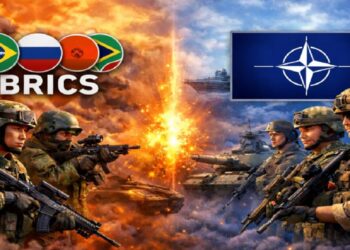


During a virtual summit convened by Brazil’s President Luiz Inácio Lula da Silva, BRICS leaders strongly condemned what they called “unjustified and illegal tariff blackmail” and secondary sanctions imposed by major Western powers.
“Our countries have become victims of unjustified and illegal trade practices. Tariff blackmail is being normalized as a tool to conquer markets and interfere in domestic affairs,” Lula said during the 1.5-hour meeting that included China, Russia, South Africa, India, Iran, Egypt, Indonesia, Ethiopia and the UAE.
He warned that “the imposition of extraterritorial measures threatens our institutions,” stressing that deeper trade and financial integration within BRICS offers “a safe option to mitigate the effects of protectionism.”
Chinese President Xi Jinping echoed these concerns, declaring that “hegemonism, unilateralism and protectionism are becoming increasingly rampant. Trade wars and tariff wars waged by some countries severely disrupt the world economy and undermine international trade rules.”
Xi emphasized the importance of strengthening the World Trade Organization and rejecting protectionist practices.
Iranian President Masoud Pezeshkian went further, calling for “a BRICS common front against Western sanctions.” He argued that such policies “not only threaten the national interests of independent countries but also disrupt global cooperation and make sustainable development impossible.”
South African President Cyril Ramaphosa also underscored the damage caused by U.S. tariffs, noting that “unilateral tariff actions are contributing to an increasingly protectionist environment which poses great hardships and danger for the countries of the Global South.”
The virtual summit came amid escalating tensions between the United States and BRICS members. Former U.S. President Donald Trump imposed tariffs of up to 50% on imports from Brazil, India, and South Africa, citing political and economic disputes. Washington also levied sanctions on trade with Russia and Iran, further isolating BRICS members from Western markets.
The BRICS group, representing nearly 40% of global GDP and almost half of the world’s population, is seeking to position itself as an alternative economic and political bloc to counterbalance Western dominance. Lula summed up the mood, saying the “Global South is capable of proposing a different development paradigm and refuting a new Cold War.”
With rising trade tensions and sanctions reshaping global commerce, BRICS leaders appear determined to resist what they view as coercive measures and to chart a more independent path for the world’s emerging economies.