

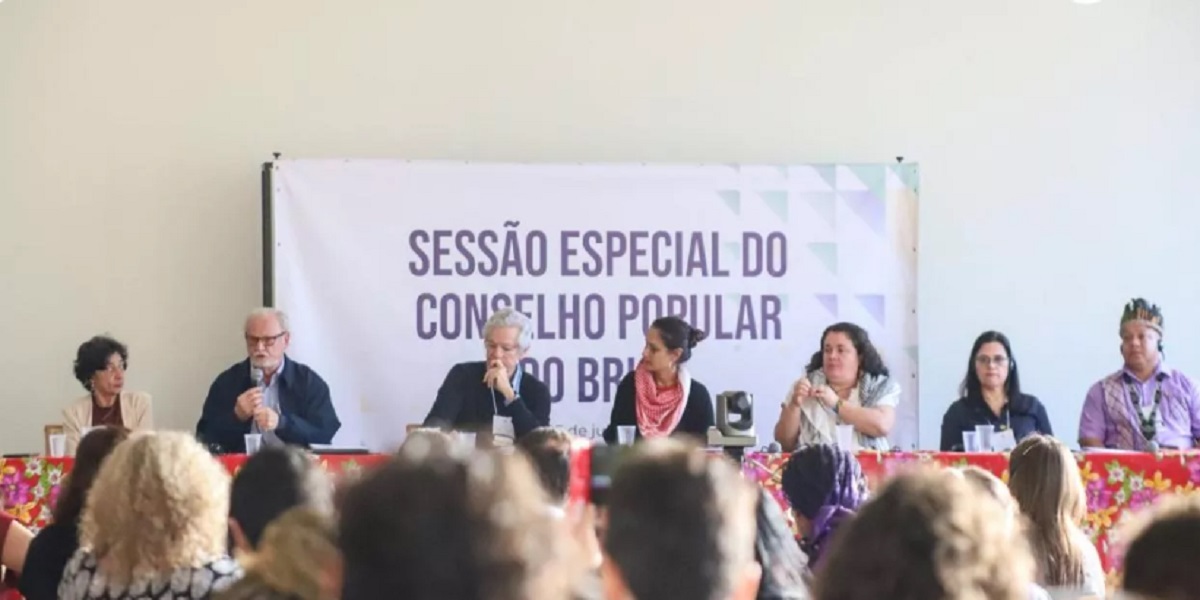
The People’s BRICS Summit opened in Rio de Janeiro on 1 December, bringing together popular movements, civil society representatives, and policy voices from across the Global South.
The four-day gathering—held at Armazém da Utopia—marks the first official activity of the newly formed BRICS Civil Council and serves as Brazil’s final flagship event before the bloc’s presidency transfers to India in 2026.
Organizers expect around 150 participants from 21 countries, underscoring growing momentum behind efforts to deepen public engagement in BRICS affairs. According to the Landless Workers’ Movement (MST), the summit aims to create a lasting interface between communities and the bloc’s leadership.
As the MST explained, the initiative seeks to ensure “a permanent channel of communication with the official BRICS,” positioning civil society as a strategic actor in shaping multipolar governance.
Discussions are structured around thematic axes that highlight the evolving ambitions of the Global South. Key topics include reform of global governance, multilateral economic cooperation, and the transformation of financial architecture, with a particular emphasis on new payment systems and the use of national currencies in cross-border trade.
Debates on de-dollarization, multipolarity, and the rebalancing of world geopolitics are also high on the agenda.
Several high-profile officials are participating in the summit. Brazil’s BRICS Sherpa, Ambassador Maurício Carvalho Lyrio, and Antonio Freitas, Deputy Head for International Finance and Economic Cooperation, are expected to lead core discussions on institutional reforms.
Dilma Rousseff, President of the New Development Bank and former President of Brazil, will join the event virtually.
The People’s BRICS Civil Council was formally established following deliberations at the 2024 Kazan Summit in Russia, where BRICS leaders endorsed its creation. As Brazil concludes its presidency, the Rio summit stands as a symbol of the bloc’s commitment to expanding civic participation and reshaping global governance from the ground up.