

The Shanghai Cooperation Organisation (SCO) and BRICS are increasingly being seen as parallel engines of change in the international system, redefining how global governance, security, and development are managed.
At the recent SCO summit in Tianjin, Chinese President Xi Jinping emphasized that the bloc is now “an essential pillar for promoting regional peace and stability,” while also expanding its economic initiatives to meet the challenges of rising global uncertainty.
South Asian analyst Professor Junaid Ahmed told TV BRICS that the summit highlights a deeper shift in global politics.
“Turkey, in particular, is a much more sophisticated and strategic actor than countries that simply turn to the IMF or China for quick fixes. Its presence here is very telling,” he observed.
Ahmed also framed the developments within a wider context: “The post-war liberal international order is collapsing… The world order that dominated for over 200 years is declining.”
Iran’s Defense Minister, Amir Aziz Nasirzadeh, reinforced this perspective, stressing that organizations such as SCO and BRICS are becoming “vital instruments to push back against Western unilateralism.” Speaking during the summit, he argued that these frameworks provide countries of the Global South with the tools to resist sanctions, strengthen sovereignty, and pursue more equitable governance.
Nasirzadeh also noted that SCO’s founding principles—sovereignty, equality, and collective security—stand in sharp contrast to what he described as Western practices of “unilateral sanctions and interventions that destabilize entire regions.” Iran’s formal entry into both SCO (2023) and BRICS (2024) reflects Tehran’s broader strategy to position itself at the heart of a multipolar world order.
Both SCO and BRICS are evolving rapidly. Xi Jinping unveiled new proposals for an SCO development bank and economic cooperation projects in energy and infrastructure, signaling a transformation from a regional security forum into a global growth driver. Meanwhile, BRICS has expanded its membership to include Iran, Egypt, Ethiopia, Indonesia, and the UAE, strengthening its status as the leading South-South cooperation platform.
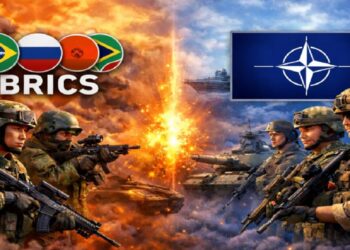
Analysts point out that the convergence of SCO and BRICS represents more than symbolism. By developing infrastructure, expanding trade in local currencies, and creating alternatives to Western-controlled institutions such as the IMF and World Bank, these blocs are challenging the traditional dominance of the U.S. dollar and NATO-led security alliances.
For countries like Russia, China, and Iran, this strategic alignment is not only about economics but also about rewriting the rules of global order.
The growing overlap between SCO and BRICS underscores a profound geopolitical realignment, one that may diminish Western leverage and amplify the collective influence of the Global South in shaping the future of international governance.